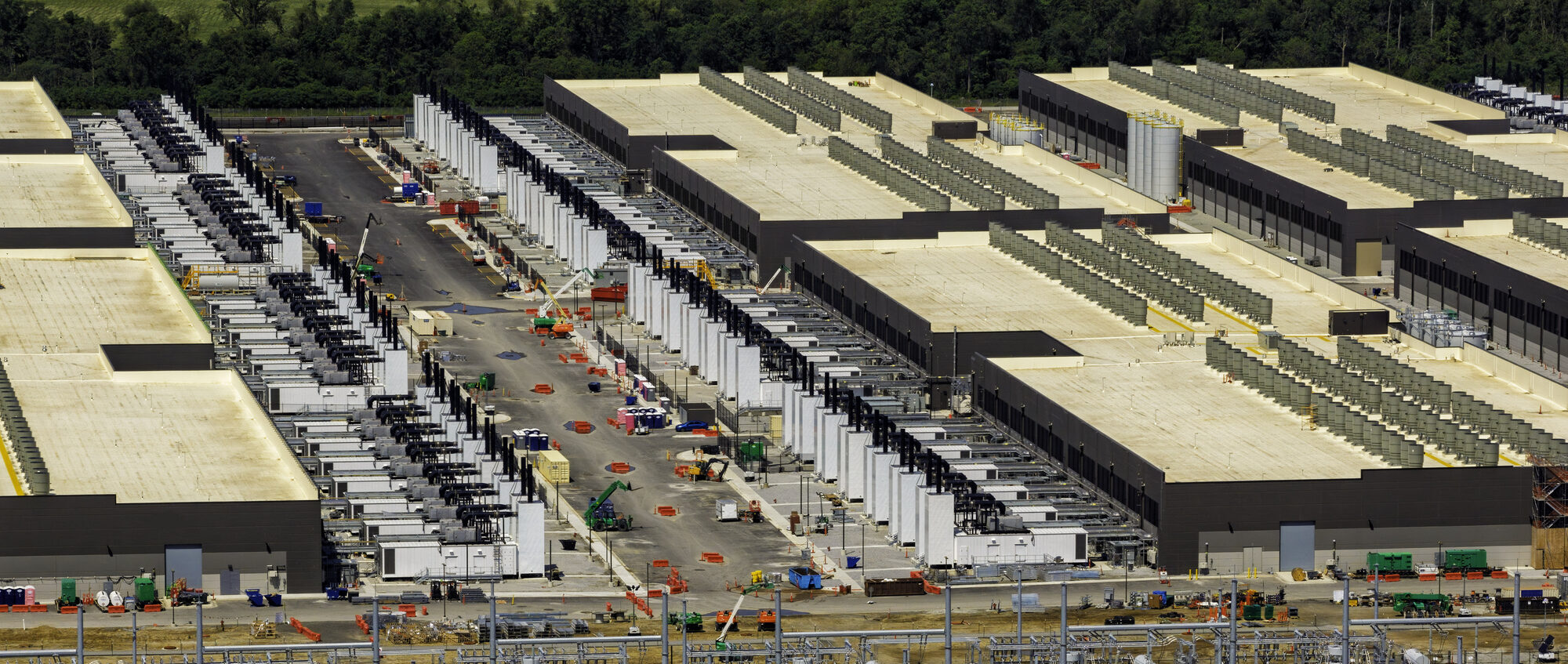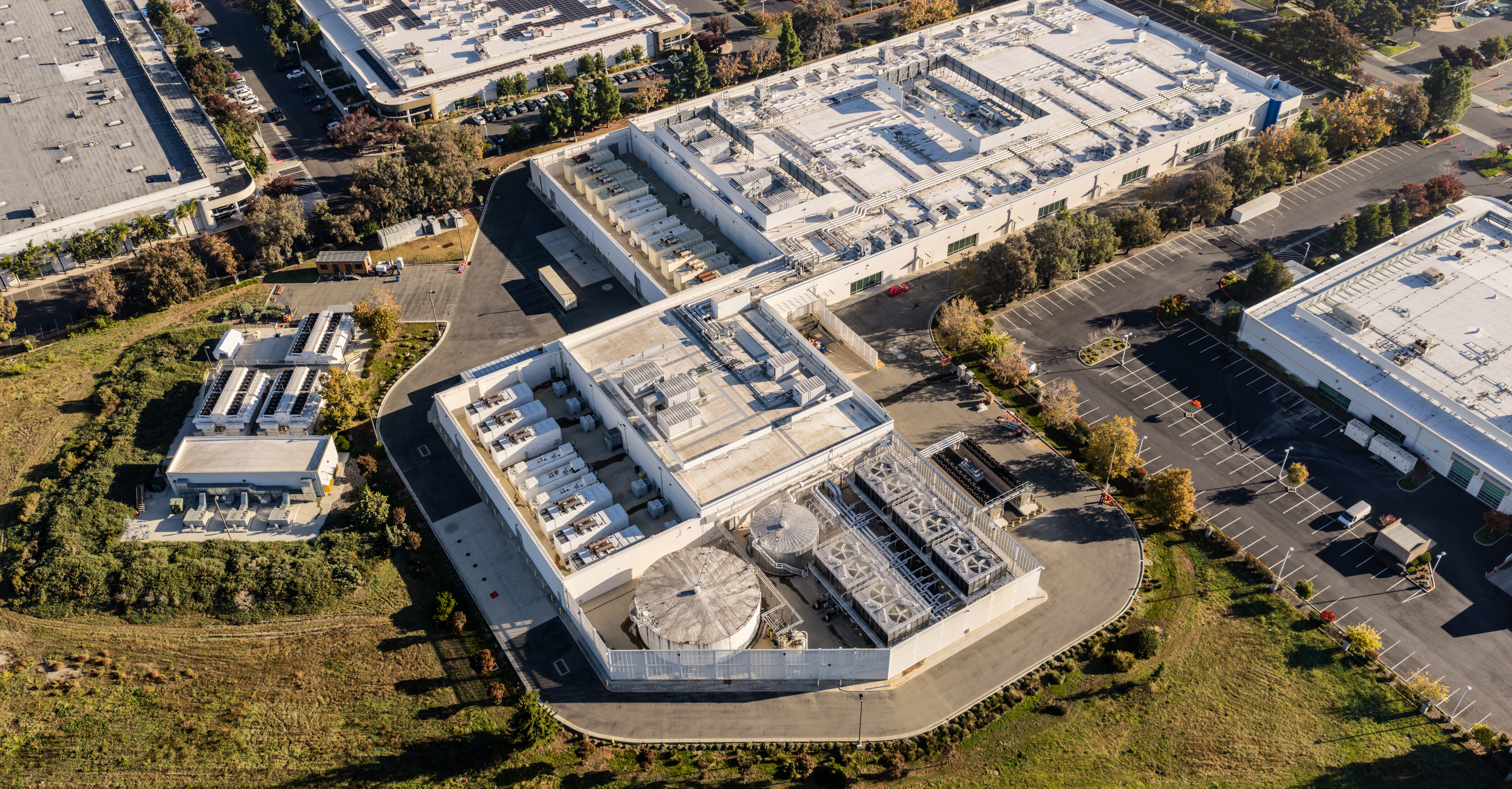
The commercial outcome for a data centre development is driven less by the building itself than by the power, cooling, resilience and operational systems that the building is designed to support.
For most data centre developments in recent years, success was driven by securing land, planning approvals and enough capacity to meet demand. Now, artificial intelligence, higher rack densities and growing pressure on power and water infrastructure are changing how data centres are planned, delivered and operated.
The projects most likely to succeed will be those that make sound decisions about infrastructure and commercial strategy from the earliest stages of development, starting with the recognition that data centres are fundamentally different from other buildings.
Changing the emphasis from MEP to EMP
Mechanical, electrical and plumbing (MEP) services can typically represent a substantial share of the budget in conventional building projects, often in the order of 25% to 45% depending on building type, complexity and performance requirements. Mechanical systems are commonly the dominant building services cost, particularly where heating, ventilation, air conditioning and occupant comfort drive the services strategy. Data centres reverse this emphasis, with electrical capacity, redundancy and high-voltage connections carrying a greater share of the cost and risk.
Data centres therefore call for a different cost language. For data centres, we can deliberately reframe the traditional mechanical, electrical and plumbing (MEP) order as electrical, mechanical and plumbing (EMP) instead. This change in sequence recognises that electrical infrastructure often leads the commercial hierarchy in data centres, with utility capacity and long-lead electrical equipment shaping both the development pathway and the asset’s future operating capability.
Civil, structural and architectural decisions remain critical, but they should respond to the operational requirements of the data centre rather than drive them.
Rather than treating the building shell as the starting point and adding services later, the cost plan needs to be shaped around the infrastructure that determines how much capacity the asset can support, how reliably it can operate, how it can be staged and how confidently it can be connected to the utility network.
Cost strategy needs to move upstream
The greatest opportunity to influence cost and value is often long before a project looks like a building. Once decisions about IT load, rack density, redundancy, cooling, utility connections and staging are embedded, the opportunity to reshape the cost outcome is limited. If decisions are evaluated too late, value management becomes a process of removing scope rather than making better choices.
Major technical and commercial choices should be tested together, including trade-offs between air cooling and liquid cooling, between direct-to-chip and chilled water, and between direct procurement and head contractor procurement.
The right option is the one that balances capital cost, operating cost, construction program and authority risks associated with power and water demand, while supporting future expansion and exit strategies.
A more mature cost language
The sector should be careful not to rely on the language of traditional commercial buildings when testing data centre capacity. In office projects, electrical capacity is often discussed in tenancy terms such as three-phase power, riser capacity, standby power and the number of amps available to a floor or tenancy. That can be appropriate where the discussion sits largely within the building’s low-voltage electrical system.
For data centres, the capacity conversation needs to extend to transmission supply, terminal stations, HV substations, transformers, UPS systems, medium-voltage and low-voltage distribution, and final rack power.
The commercial assessment should therefore be framed around power capacity, not amps alone. Amperage changes at each voltage level, so it does not provide a consistent basis for assessing the whole asset. Under an electrical, mechanical and plumbing (EMP) approach, the benchmark naturally shifts to the electrical capacity that defines the facility’s commercial potential. This is why data centres are commonly tested against measures such as cost per megawatt ($/MW), cost per kilowatt ($/kW) of IT load and cost per connected capacity.
Traditional elemental cost planning remains the foundation of robust cost management and should continue to be prepared using recognised measurement standards. However, an EMP-led assessment adds the functional benchmarking needed for data centres, testing the project against measures such as $/MW, $/kW of IT load and $/rack to determine whether the design aligns with comparable facilities and the asset’s intended commercial performance.
The next generation of data centres
Data centres are critical infrastructure that will underpin how we live, work and connect in an incredibly fast-changing, AI-enabled world. Australia has a significant opportunity to deliver data centre infrastructure that is efficient, resilient and valuable for owners and the communities that host it.
The projects that create the greatest value will be those that integrate power, cooling, water, procurement, operational performance and long-term ownership objectives into a single commercial strategy, guided by a clear understanding of how technical decisions influence commercial outcomes long before construction begins.