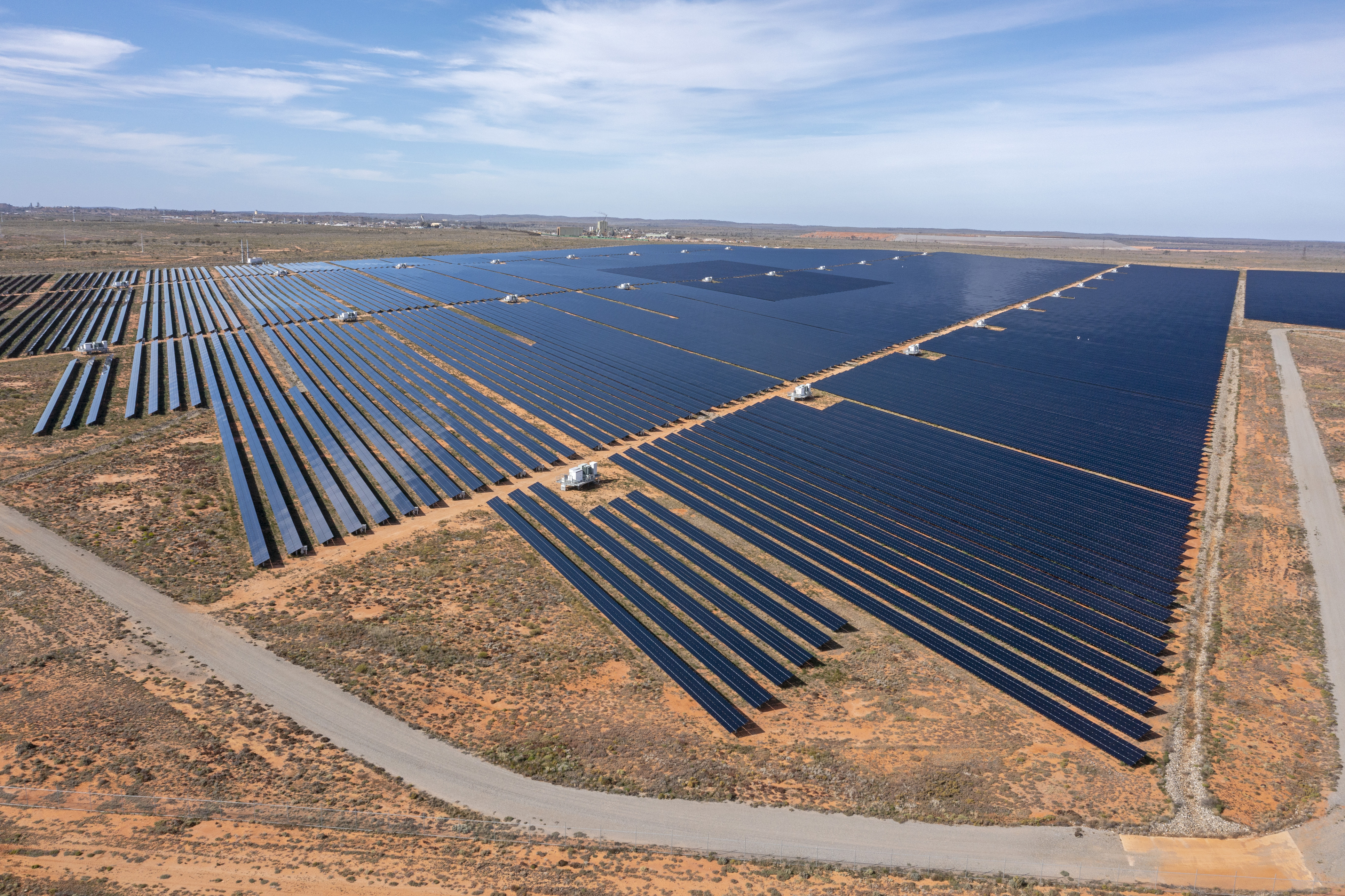
Australia is not short of renewable energy ambition.
The development pipeline is substantial and delivery is accelerating. But given the capacity and escalation pressures identified in WT’s latest Australian Construction Market Conditions Report – November 2026, the energy sector’s challenge is increasingly one of converting investment into operating capacity.
There has been real progress. During FY26, AEMO reported that the National Electricity Market connection pipeline grew from 53 GW to 75.4 GW, and a record 9.1 GW of new generation and storage capacity reached full output. Yet the size of the pipeline alone is becoming a less useful measure of how quickly the transition is moving. What matters increasingly is how efficiently projects move from investment through delivery, connection and commissioning.
From what I am seeing, a strong investment case does not guarantee a deliverable project. Grid connection, network readiness, specialist capability and long-lead electrical equipment can all sit on the critical path. If those dependencies are not understood early, the commercial-operation date can quickly come under pressure.
Construction completion is not the end of the program
One issue I see being underestimated is the gap between finishing construction and having an asset commercially operational. A project can be substantially complete while network works, registration, testing and commissioning are still underway. Those activities determine when the asset can operate at full output and start generating its expected return.
The commercial consequences can be significant. A delay to operation can mean deferred revenue alongside extended financing, project management, insurance and other holding costs. Depending on the project, it can also affect offtake arrangements and the expected investment return. For owners and investors, the milestone that matters is when the asset can energise and start earning, rather than when construction finishes.
Capacity needs to be considered across the whole delivery system
The constraints I see most consistently are grid and connection capacity, and the specialist capability needed to design, deliver and commission projects. The workforce issue is more specific than a general shortage of construction workers. Energy is competing with transmission, data centres, defence, housing and other infrastructure programs for overlapping skills, with pressure most evident in high-voltage electrical, protection and control, grid compliance and commissioning. These skills take time and experience to develop and cannot be scaled quickly simply by adding people.
Sequencing compounds the problem. A project program can be perfectly logical in isolation and still become difficult to deliver once the network, equipment and specialist resources it depends on are considered. Several projects may each make reasonable assumptions about contractor availability, commissioning resources or network interfaces, yet collectively require more capacity than the market can provide in the same delivery window. For owners with multiple projects, that makes portfolio-level sequencing increasingly important.
Earlier procurement is not automatically better
Long-lead electrical equipment adds further complexity, because protecting an energisation date may require major equipment decisions before every technical and connection requirement is settled. Waiting provides greater design certainty but can expose the program to manufacturing lead times. Committing early may secure capacity, but it increases the risk of later specification changes, variations or stranded expenditure. Project teams need to understand which decisions genuinely control the commercial-operation date, when they must be made and what uncertainty remains at that point.
Contracting raises a similar issue. Connection, interface and program risks can be transferred into an EPC or another delivery contract, but risk allocation does not remove delivery risk. Someone will still price it, qualify it or ultimately carry it. Better outcomes come from reducing uncertainty wherever practical, then allocating the remaining risk to the parties best able to manage it.
Plan backwards from commercial operation
For owners and investors, this points to a relatively simple change in approach. Instead of developing a construction program and fitting connection and commissioning around it, start with the required commercial-operation date and work backwards. That means bringing network readiness, connection maturity, equipment decisions, testing, commissioning and specialist resourcing into feasibility much earlier. Owners managing multiple projects should also test their portfolio against market capacity, rather than assuming every project can independently access the contractors, specialists, equipment and network windows it needs.
There will always be uncertainty. Different technologies, locations and network conditions create different delivery challenges. The aim is to understand those uncertainties early enough for the investment case, cost plan, procurement strategy and program to reflect how the project can realistically be delivered.
Australia has shown it can bring significant volumes of renewable generation and storage into operation. The test now is whether we can sustain and scale that delivery, because the value of the pipeline ultimately depends on how effectively it is converted into operating capacity.
This article first appeared in pv magazine Australia.