Australia’s housing challenge is usually framed as an issue of supply, but there’s more to it.
The buildings going up now across build-to-rent (BTR), purpose-built student accommodation (PBSA), retirement living, co-living and social and affordable housing will probably still be operating in the 2060s. Delivery speed is important, but so is how much these buildings will cost to run and whether people will want to keep living in them. It’s this perspective that must drive feasibility and priorities.
Why the market is changing
Larger, longer term owners and specialist operators now dominate many living sectors, and they measure value in decades of cashflow, not as a single completion cost. These ownership models rely on confidence about operations: investors expect predictable maintenance regimes, stable energy use, fully planned and budgeted asset replacement schedules, and satisfied residents who stay.
Occupants are expecting better amenity and service, which raises the bar for design and facilities management.
These factors create a market that rewards whole-of-life thinking. For projects to perform, efficient operation and lifecycle cost must be locked in from the start.
Don’t underestimate the cost of short-term decision making
Across a typical asset life, the money spent maintaining, servicing, cleaning, powering and eventually replacing elements of the building will far outstrip the money spent in design and construction. Assets and systems that may be cheapest at tender could be the most expensive when we consider their total cost of ownership.
Decisions are often made under delivery pressure by people who won’t feel the long-term cost impact. Bespoke components may increase the complexity of getting spare parts. Finishes chosen for speed or cost savings may demand more frequent replacement. A facade that saves on capex but requires frequent maintenance could become a liability. These are predictable consequences of decisions that prioritise delivery speed over lifecycle certainty. Once these decisions are baked in, they set the operating cost for the building, which can be hard to shift.
This means that feasibility should model multiple scenarios and make trade-offs visible and comparable by looking at outcomes across different time horizons. Every early conversation needs to shift from ‘what’s cheapest now?’ to ‘what will deliver the best total cost of ownership and satisfy residents?’ Incorporating a facilities management (FM) perspective early can guide design choices based on real maintenance constraints, which will reduce friction at handover.
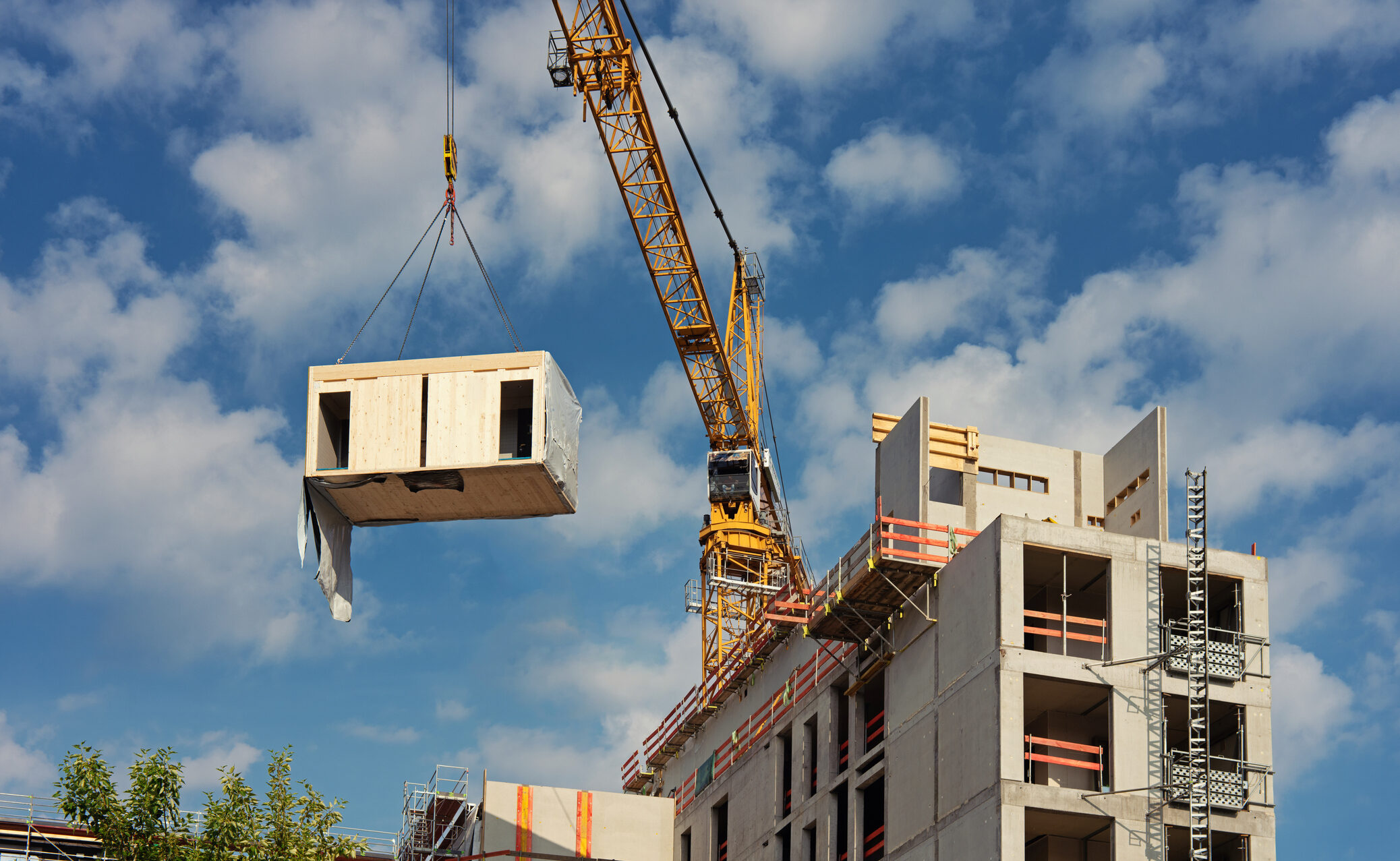
Cost estimating should rigorously capture complexity rather than smoothing it away. The design process needs to be disciplined and limit late-stage change. And careful, strategic choices must be made about the most-effective delivery model (such as considering modular construction for speed to market or adaptive reuse to capitalise on premium location).
The sectors differ, but the same logic applies
Across BTR, co-living, PBSA, retirement living and social and affordable housing, the commercial mechanics and tenant priorities differ but the importance of a long-term view is the same. Social and affordable housing must prioritise durability and maintainability to minimise long-term operating cost. PBSA benefits from disciplined standardisation, robust finishes and the latest digital integration to meet student expectations and maximise per-bed income. BTR needs amenity calibrated against operating cost so yield is maintained. Retirement living demands premium amenity, minimal disruption and clubhouse-centric design to attract downsizers, with predictable lifecycle cost to ensure appropriate returns.
The fundamental levers across all sectors are the same: rigorous feasibility, lifecycle cost modelling, repeatable delivery, FM alignment, and effective digital solutions that deliver usable asset information.
Digital solutions turn information into a long-term asset
Better decisions depend on reliable information. BIM governance, reality capture, structured asset data and reporting can help project teams test options and coordinate design and delivery. They also provide operators with more useful information at handover.
Their value depends on establishing clear information requirements early, including relevant deliverables in project documentation, and maintaining accountability for data quality throughout delivery. Without this discipline, information can become incomplete or outdated as it moves between design, construction and operation.
Well-governed information supports more confident decisions during delivery and provides a stronger foundation for maintenance, capital planning and future asset interventions.
Short-term gains or enduring value?
The living sectors are facing similar challenges to every other construction project, with volatile construction costs and stretched contractor capacity. Operating expectations across all residential asset classes continue to rise and the pressure to get to market is intense. But the next phase of growth in the living sectors will be defined by assets that best manage cost and performance over time.
Long-term performance is the common ground where value for developers and community converge, and it depends on asking from Day 1 what Year 30 might hold.